
Culled from The Townhall
President Donald J. Trump has proven adept at cutting deals that benefit the United States. His America First policy includes efforts to negotiate with both adversaries and allies to get better trade deals for American consumers and workers. More work needs to be done to make sure that the influence of China in other nations does not become a new trade barrier that stops minerals from coming to the United States without a Chinese supply chain.
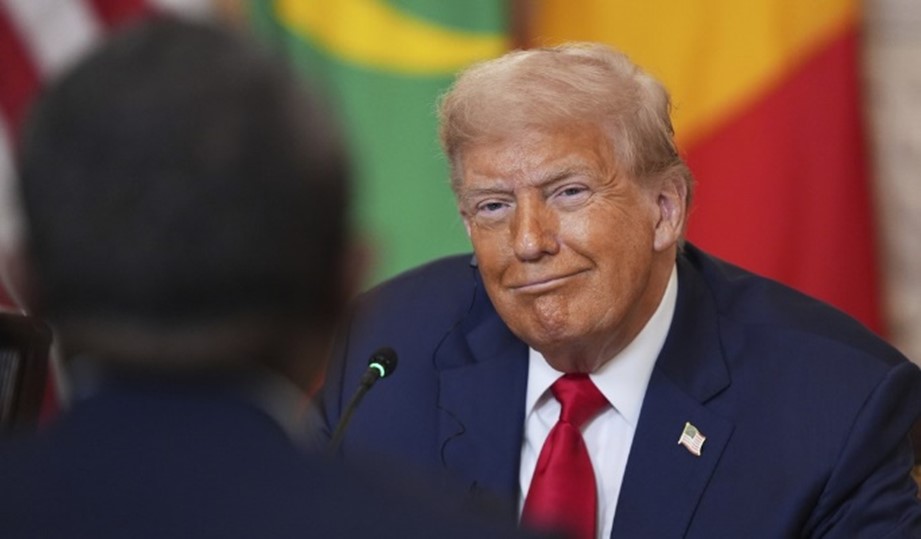
The November 1, 2025 meeting in South Korea between American President Trump and Chinese President Xi Jinping resulted in a great deal for both nations. The agreement contained assurances that China would stop the flow of fentanyl into the United States, eliminate export controls on rare earth minerals, end retaliation against U.S. semiconductor manufacturers, and open China’s market for some agricultural exports. That was a great step toward getting fairness from China in direct trade deals.
Critical to President Trump’s historic success in opening up China’s market was a coordinated effort across the Executive Branch from the Department of Commerce to the U.S. Department of Agriculture. What many believed to be an impossible task, the goal of a trade agreement with China was fostered by the president’s leadership and his team working together in unified support. The execution of such grand strategy, on one of the most complex and complicated trade issues that has frustrated presidents for decades, is a defining moment for the America First economic agenda.
The next step should be to study China’s influence in other nations where it controls supply chains and has attempted to muscle out Western economic influence. Confronting the global, persistent threat to American interests from the Chinese Communist Party (CCP) in other countries requires a similar, coordinated approach. This approach dictates a consistent policy across the Trump Administration to counter China’s growing influence in South America and Africa. China uses promises of infrastructure projects through its Belt and Road initiative to marginalize Western influence.
Access to rare earth minerals has become the next economic struggle for the West amid China’s increasing control of supply chains abroad. It was a great development for China to agree to reforms in the sale of rare earth minerals from China. In response to China President Xi Jinping’s announcement months ago of an aggressive expansion of China’s rare earth restrictions on exports, Select Committee on the CCP Chairman John Moolenaar (R-MI) argued on October 10, 2025, “China’s action today is an economic declaration of war against the United States and a slap in the face to President Trump amid his efforts to fight for a level-playing field.” After months of negotiations, Secretary of the Treasury Scott Bessent helped secure the recent agreement between the U.S. and China that has reduced the trade fight over rare earth minerals, but the fact remains that China is, by far, the largest mining and exporting nation of rare earth minerals on the planet. It is important that Africa be part of any future trade agreement and be open to the United States as a source of these minerals.
The Trump Administration needs to shift focus to Africa and the growing economic influence of China in that area of the world. Through the offer of infrastructure projects, China has cut off supply lines to other nations so that it can control the flow of minerals out of Africa to other nations. There needs to be a focus on pressuring China to stop taking actions that further consolidate its hold on the world mining supply.
One area of concern is that Canadian company Ivanhoe Mines, in which the CCP appears to have significant control, is fighting a proxy war against the interests of the United States in Africa. Bloomberg reports that one Ivanhoe partner, Zijin Mining Group Co., Ltd., is China’s largest producer of key rare and critical minerals with operations spanning 15 countries around the world. More evidence of ties between Ivanhoe and the Chinese government is an announcement that CITIC Metal Co. Ltd. provides CCP-backed funding to Ivanhoe. While undermining American interests, CITIC simultaneously pursues critical minerals such as copper, zinc, lithium, gold, and niobium. Ivanhoe’s joint venture with CITIC, unsurprisingly given the influence of the CCP in the relationship, results in cobalt returning to China while undermining the Trump Administration’s agenda in the process.
More needs to be done to fight Chinese control of supply chains for the West to have access to rare earth minerals in Africa. The Trump Administration is clearly working hard to finally turn the tide on Chinese global malign influence, and Africa is one front in that economic war. As we celebrate the historic trade agreement in South Korea, we need similar unity of effort in meeting the moment by finally standing up to the CCP in Africa.