
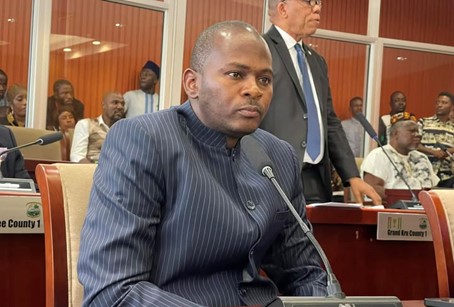
Senator Johnny Kpehe of Bong County has strongly opposed to any new company taking over calls monitoring in the country. He said the best option would be to renegotiate the existing contract with Telecommunication International Alliance (TIA).
Senator Kpehe emphasized that the preferred option would be to renegotiate or review and place the necessary clauses that will benefit the country. He made the statement on Wednesday on Capitol Hill in an interview with journalists.
Senator Kpehe’s call comes against the backdrop of a plan by the LTA to cancel an existing agreement it has with the Telecommunication International Alliance (TIA) due to irregularities.
His statement was in line with that of Vice President, Jeremiah K. Koung, when he appeared on state radio on Monday. The Vice President said the cancellation of any contract by a government sends a negative signal to the business community.
He said, “This is not a good practice for any serious government. I think the best thing to do is to renegotiate where the country will benefit. The joint committee has made its recommendations already to the President, and we are waiting,” he said.
Several companies with which government signed agreements are under the microscope due to what officials consider “irregularities” in those agreements. For instance, the government last year issued an Executive Order, ordering the suspension of the-Telecommunication International Alliance (TIA/LTA) deal.
Senator Kpehe said that the best thing any nation can do is to renegotiate the contract and do the needful, as required by law.
According to him, the joint committee of both houses recommended for its renegotiation, but the LTA has decided to bring a new company into the market to replace it. Also, Minister of Justice, Cllr Oswald Tweh, expressed his opposition to the cancelation of the contract.
He spoke generally on contracts. He added Liberia is obliged to have these deals in place because anything contrary will have negative impact, and will scare investors, and doing so would put the country in the awkward position of being unreliable.