
Citizens of Weala, Margibi County, have renewed strong calls for the establishment of the War and Economic Crimes Court (WECC) in Liberia, emphasizing that justice, accountability, and national healing can no longer be delayed.
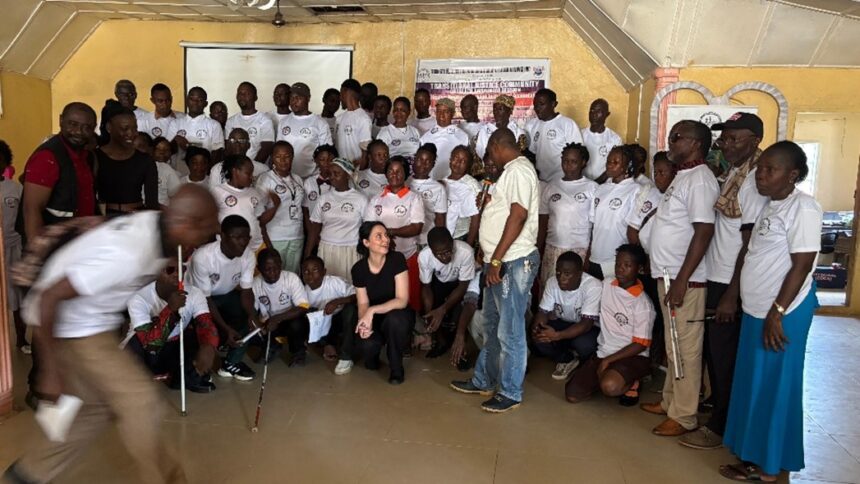
The call was amplified during a one-day Transitional Justice Awareness Program held on Friday, May 15, 2026, organized by the Transitional Justice Working Group of Liberia (TJWG) in collaboration with key transitional justice stakeholders.
The gathering brought together community residents, students, civil society organizations, and representatives from the Office of the United Nations High Commissioner for Human Rights (OHCHR), along with officials from the Office for the Establishment of the War and Economic Crimes Court for Liberia (OWECC-L), led by Executive Director Dr. Cllr. Jallah A. Barbu.
Held under the theme, “Healing the Nation Through Justice and Accountability—The Liberian Perspective”, the program aimed at strengthening public understanding of the WECC and the National Anti-Corruption Court (NACC), including draft bills for both courts and Executive Order 164, which renews OWECC-L’s mandate.
During the event, many citizens of Weala openly expressed frustration over decades of impunity and urged lawmakers to support the establishment of the WECC without delay.
They argued that Liberia cannot fully progress if those accused of war crimes and large-scale corruption remain unaccountable.
Residents maintained that justice is essential for lasting peace, and called on national leaders to prioritize the court’s establishment, citing the prolonged suffering endured during Liberia’s civil conflict.
“We need justice for the innocent people who died. The War and Economic Crimes Court must come so that the truth can be told and those responsible can face the law,” one resident said during the open forum.
Speaking on the topic, “Making Justice and Accountability for Atrocities and Corruption Meaningful”, TJWG head Martin Nlonjae Toe Sr. aligned with the citizens’ concerns.
He highlighted that the establishment of the WECC and NACC is a critical step toward ending Liberia’s long-standing culture of impunity.
According to Toe, the courts represent hope for victims of the civil war and a tool to combat corruption in public institutions.
“The courts will bring lasting healing to victims and help end the culture of impunity that has permeated Liberia,” he said, underscoring that citizens must remain informed and actively involved if transitional justice is to succeed.
Toe emphasized that a combination of criminal prosecutions, truth-telling, reparations, and institutional reforms is necessary for Liberia to achieve sustainable peace and accountability.
Providing an overview of the draft laws recently submitted to President Joseph Nyuma Boakai, Dr. Cllr. Jallah A. Barbu explained that the WECC will focus on crimes committed during Liberia’s civil conflict between 1979 and 2003, while the NACC will tackle corruption-related offenses.
He reminded participants that the draft law for the NACC includes a lifetime ban from public office for individuals convicted of corruption.
Dr. Barbu also encouraged citizens to engage their lawmakers to ensure the passage of the draft bills so that justice mechanisms can begin functioning.
Citizens were encouraged to maintain pressure on national leaders, with speakers reminding attendees that President Boakai has already played his part by renewing the Executive Order establishing OWECC-L.
“Now it is left with all Liberians to support this process so that the long-awaited justice can be achieved timely,” Toe noted.
The awareness program forms part of on-going national efforts to strengthen public participation in Liberia’s transitional justice process. For the people of Weala, the message was clear: the time for justice is now.
Their call adds to nationwide voices demanding accountability for war crimes and economic crimes, and reflects a growing public desire for a Liberia where peace is built on truth, justice, and respect for the rule of law.