
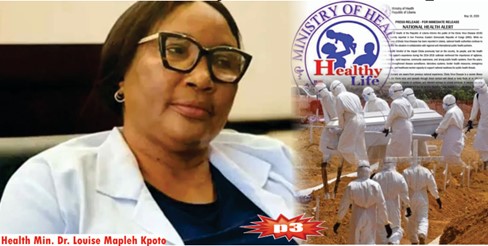
The Ministry of Health has alarmed over the Ebola Virus Disease (EVD) outbreak recently reported in Ituri Province, Eastern Democratic Republic of Congo (DRC). While no confirmed case of Ebola Virus Disease has been reported in Liberia, national health authorities continue to closely monitor the situation in collaboration with regional and international public health partners.
According to the Health Ministry, Liberia remains mindful of the impact Ebola previously had on the country, its people, and the health system. The nation’s experience during the 2014—2016 outbreak reinforced the importance of vigilance, early detection, rapid response, community awareness, and strong public health systems. Over the years, Liberia has strengthened disease surveillance, laboratory systems, border health measures, emergency preparedness, and healthcare worker capacity to support national readiness for pubic health threats.
As many Liberians are aware from previous national experience, Ebola Virus Disease is a severe illness caused by the Ebola virus and spreads through direct contact with blood or body fluids of an infected person, contaminated objects or surfaces, and infected animals or animal products. A person can only spread the disease after symptoms begin to appear. Symptoms may include fever, weakness, headache, vomiting, diarrhea, abdominal pain, and bleeding in severe cases.
The Ministry of Health, together with the National Public Health Institute of Liberia (NPHIL) and partners, continues to maintain surveillance and preparedness measures, including monitoring at health facilities and border points, public awareness activities, and coordination with WHO, Africa CDC, and regional health authorities.
The ministry encouraged the public to remain calm, practice regular handwashing, avoid direct contact with bodily fluids of sick individuals, report suspected illnesses promptly, and follow official information from the Ministry of Health.
The Ministry of Health reassured the public that there is currently no confirmed Ebola case in Liberia, and that the situation remains under close observation, and updates will be provided through official channels as necessary.
It can be recalled that Liberia faced the deadliest phase of the 2014–2016 West Africa Ebola outbreak, which was the largest since the virus was first identified in 1976. The first cases were reported on March 30, 2014, and by December 2015 Liberia alone had recorded 10,666 cases and 4,806 deaths. At the peak in August and September 2014, the country was reporting 300 to 400 new cases weekly. The outbreak spread to all 15 counties, with Monrovia experiencing overflowing treatment centers, patients dying outside facilities, and bodies sometimes left uncollected for days.
The human cost was severe. More than 375 health workers were infected, and 189 died while caring for patients. The epidemic also devastated Liberia’s fragile health system, which was already weakened by years of civil war and had only 50 doctors for 4.3 million people at the time. Beyond the loss of life, Ebola disrupted education, trade, food supplies, and basic health services, deepening poverty and food insecurity across the country. WHO officially declared Liberia free of Ebola transmission on May 9, 2015, 42 days after the last confirmed case was buried.
The scale of destruction underscored how quickly a disease can overwhelm a country with limited resources and porous borders. Liberia’s experience became a global case study in the need for early detection, rapid isolation, safe burials, contact tracing, and community engagement. It also revealed that health security is national security, and that preparedness cannot wait until an outbreak arrives.
Given that history, observers say the timely Health Alert Notice issued by the MOCSA Medical Team under the Ministry of Health deserves recognition. They noted that President Joseph Nyumah Boakai and the Minister of Health have shown foresight by ensuring that protocols, surveillance systems, and public education are in place even when there are no confirmed cases. According to them, this proactive stance reflects the lessons learned from 2014–2015 and demonstrates a commitment to protecting Liberians from a repeat of that tragedy.
“Liberia’s progress since Ebola has been built on the courage of health workers and the resilience of communities. By acting early and communicating clearly, the current administration is honoring that legacy and strengthening the country’s readiness for any future health threat. Continued vigilance, investment in the health system, and public cooperation remain the best defense against outbreaks like Ebola,” they added.