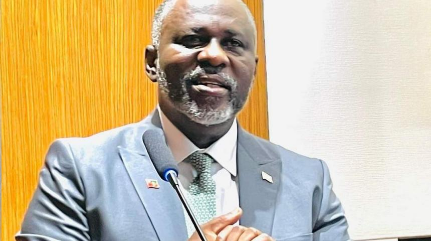

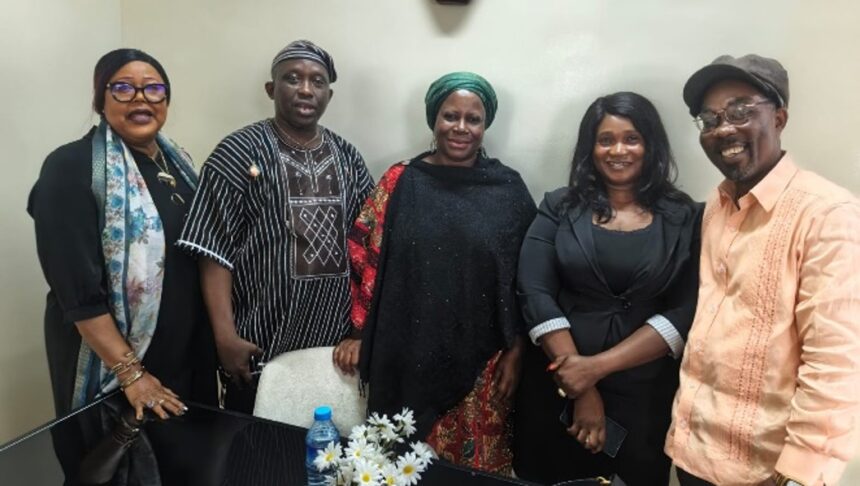
A high-powered delegation of transitional justice actors, including representatives of the Office for the Establishment of the War and Economic Crimes Court for Liberia (OWECC-L), headed by its Executive Director, Dr. Jallah Barbu, and its partners, has held a productive and cordial engagement with the President Pro Tempore of the Liberian Senate, Nyonblee Karnga-Lawrence, as part of on-going legislative advocacy surrounding the draft laws seeking to establish the War and Economic Crimes Court (WECC) and the National Anti-Corruption Court (NACC).
The meeting forms part of a broader series of consultations being undertaken by transitional justice stakeholders aimed at strengthening legislative support for the establishment of accountability mechanisms that will address Liberia’s legacy of war-time atrocities and entrenched corruption.
According to sources familiar with the discussions, the engagement was conducted in an atmosphere of mutual respect, openness, and patriotism, with participants focused on advancing Liberia’s national interest and promoting justice, accountability, and reconciliation.
While details of the meeting were not officially disclosed to the media, an insider described the discussions as “very friendly and constructive”, noting that all parties demonstrated a shared commitment to ensuring that Liberia continues to make progress toward ending impunity and strengthening the rule of law.
The engagement comes at a critical time as the Liberian Senate has already received the two landmark bills and subsequently forwarded them to its Judiciary Committee for review and recommendations. The committee is expected to examine the proposed legislation and submit its findings to the Senate’s plenary for consideration and possible action.
The draft laws seek to establish two key institutions: the War and Economic Crimes Court, which is intended to prosecute individuals responsible for serious violations of international humanitarian law and other grave offenses committed during Liberia’s civil conflicts; and the National Anti-Corruption Court, which aims to strengthen accountability and prosecution of corruption-related offenses.
Advocates believe that the establishment of both courts represents a significant step toward implementing recommendations contained in Liberia’s transitional justice framework and responding to long-standing calls from victims, survivors, civil society organizations, and international partners for greater accountability.
The delegation emphasized the importance of sustained collaboration between civil society, government institutions, and the Legislature in ensuring that the legislative process moves forward in a transparent and inclusive manner. They also highlighted the need for broad national support to guarantee the successful establishment and operation of the proposed courts.
The meeting with Senate Pro Tempore Karnga-Lawrence is part of a wider engagement strategy aimed at informing lawmakers about the importance of the legislation and encouraging bipartisan support for the bills as they progress through the legislative process.
Observers have noted that the Legislature’s consideration of the WECC and NACC bills marks a defining moment in Liberia’s democratic and justice reform journey. The proposed courts are widely viewed as essential mechanisms for promoting accountability, deterring future abuses, combating corruption, and strengthening public confidence in national institutions.
As the Judiciary Committee begins its review, transitional justice actors remain hopeful that lawmakers will seize this historic opportunity to advance the cause of justice and accountability for the benefit of present and future generations.
The Office for the Establishment of the War and Economic Crimes Court for Liberia and its partners reaffirm their commitment to constructive engagement with all branches of government and stakeholders as efforts continue toward the realization of a more just, accountable, and prosperous Liberia.