
The Society for the Conservation of Nature of Liberia (SCNL) has continued to demonstrate its responsibility to communities where they are managing conserved forest in the country.
As the lead National Civil Society conservation organization in Liberia working with government, international organizations, civil society, Indigenous peoples, local communities, and the private sector for over 30 years, SCNL has provided numerous opportunities for communities affected from conservation.
The organization over the years, which has continued to build consensus among stakeholders, has helped to enhance the capacity of government agencies, CSOs, and program target groups to impact conservation efforts since its establishment in 1986 (with the aim of promoting the sustainable use of natural resources, and environment protection).
It has maintained its membership as part of efforts to increase voices for nature conservation in Liberia as well within the West African sub-region through sustainable partnership.
Since its establishment, SCNL has, along with its partners, continued to provide effective management of parks in Liberia, including the Sapo National Park, the Gola National Park, and others.
During the years, SCNL has provided training for foresters, rangers, forest guards from the communities to help provide security for the parks. These trainings have helped to build the capacities of young people in the communities and provided them jobs.
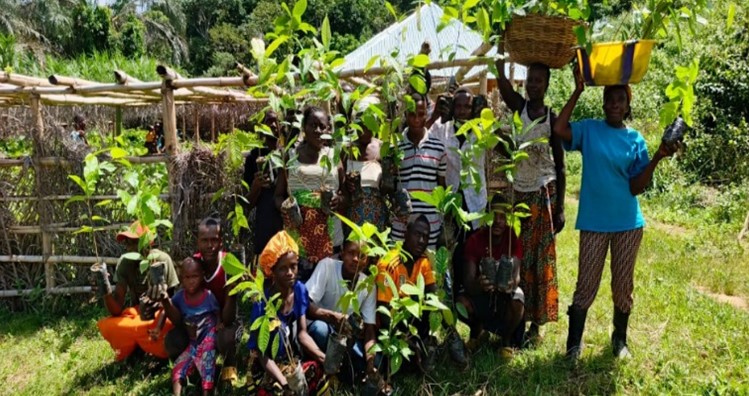
Through its various projects, the organization has provided thousands of United States dollars to communities for micro-loan, honey bees productions, crops farming and cassava farming & processing.
“Conserving Liberia’s forests is one of our major goals, and we do this through various projects of community forestry, such as the GolaMa Project. This helped to establish Community Forest Management Agreements (CFMAs) and financial sustainability business plans,” an excerpt from an annual report read.
In a conversation with its management, the following were outlined as being some of its engagements and interventions: “We engage various stakeholders in advocating for our vision and do training and education programs, do advocacy for the establishment of a network of protected areas, education of young people about environmental issues, with an emphasis on birds.”
Others include, “The engagement of local community on alternatives to killing of wildlife in a sustainable way. Implementation of alternative livelihoods projects around protected areas and those proposed for protection. E.g. the Green Livelihood Alliance Project which ensures forest communities are benefiting from new, sustainable, alternative income generating activities under CFMAs, while contributing to forest protection, reduce bushmeat hunting/trading of protected species in the project area.”
More than eight communities have benefited from the Green Livelihood project around the Sapo National Park, and over 10 communities have also benefited from the GolaMa Project around the Gola National Park in Western Liberia.
Currently, SCNL is working alongside other partners under the guidance of Conservation International and the EPA on the FOLUR Liberia project.
FOLUR means Food Systems, Land Use, and Restoration. It is a global program supported by the Global Environment Facility and led by the World Bank to fight deforestation and promote sustainable farming, especially for cocoa and palm oil.
The organization has been able to form partnership with several national and international organizations in the implementation of projects. These partners each has at least supported a project implemented by SCNL.
Over the years SCNL has work with the following partners who have helped support projects of different kinds in conserving Liberia’s forest: BirdLife International, The Royal Society for the Protection of Birds (RSPB), Conservation International (CI), The Forestry Development Authority (FDA), Government of Liberia (GOL), The European Union (EU), Critical Ecosystem Partnership Fund (CEPF), United Nation Development Program-Liberia, Rainforest Trust and the United States Agency for International Development.
The Darwin, in partnership with SCNL, is helping communities find an alternative means of livelihood in order to reduce pressure on the forest. Darwin, through SCNL, has 25 women groups, each group comprising of 5 members who receive loans to start-up or improve their businesses. Darwin also hopes to explore the business in the box idea to further help community dwellers.
SCNL is also implementing the PaPfor project under the European Union. This is a transboundary project between Sierra Leone and Liberia that is combating the high rate of deforestation and degradation within the Gola Landscape that is causing the loss of globally important biodiversity and decreased resilience to climate change, while local population lose valuable forest goods and services.
In northern Liberia, SCNL and CI are working together in the Nimba Mountains area, working with communities to establish conservation agreements.
For western Liberia, SCNL and RSPB are working together to implement the GolaMA Project–“Bringing Forest and People Together”–to establish community-managed forests to serve as corridors between protected areas. RSPB is a strong supporter of SCNL, providing both significant core support and capacity development.
The organization is also collaborating with BirdLife International to implement a project funded by the Aage V. Jensen Charity Foundation (Denmark) to realize the potential of the Gola National Park. With support from the Arcadia Fund, BirdLife International provides core support and capacity development to SCNL.
In conclusion, SCNL is working with all these partners in making sure that the forest and species are protected from being destroy and also making efforts to support the communities to find alternative means of survivor. SCNL is truly the leader when it comes to conservation in Liberia.