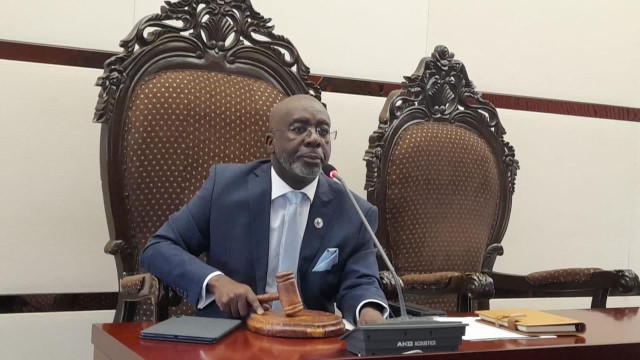

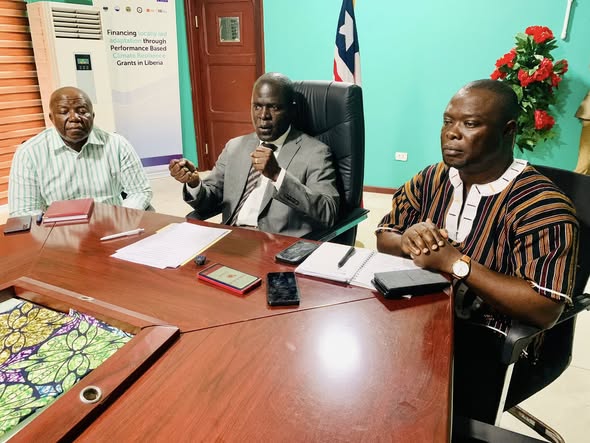
The Executive Director of the Environmental Protection Agency (EPA), Dr. Emmanuel K. Urey Yarkpawolo, has alarmed over the unstable rainfall patterns since 2025. According to him, this is being caused by the rippling effect of climate change, and threatens Liberia on two fronts: the first is sea-level rise—scientific projections indicate that sea levels could rise from about 0.6 meters to as much as 1 meter by the year 2100; and the second is the changing pattern and intensity of rainfall—rain no longer comes when it is expected, and when it does it often comes in large and destructive amounts.
Yarkpawolo made the disclosure on Thursday, January 8, 2026. He noted that for generations, Liberia’s seasons followed a clear and dependable rhythm: the rainy season normally ran from mid-April to mid-October, and the dry season from mid-October to mid-April. He said farmers relied on this pattern to know when to plant and harvest, and engineers relied on it to plan construction and development works.
However, he said, in recent years, especially in 2025 and now in early 2026, this pattern has changed. Instead of experiencing a clear dry season, Liberia has been recording persistent and unusual rainfall, often accompanied by strong winds and flooding. Floods and storms displaced thousands of people, destroyed homes, washed away properties, and made living conditions extremely difficult in Monrovia, its surrounding communities, and in other parts of Liberia. Even now, in the first days of January 2026, Liberia is witnessing heavy rains and strong winds occurring late at night and in the early morning hours.
He underscored that, while climate change is driven by global factors, local environmental practices are making its impacts worse. Heavy reliance on charcoal and firewood, the increasing number of old and fuel-inefficient vehicles, industrial emissions, deforestation, destruction of wetlands, poor waste management, and pollution of rivers and streams by mining activities all weaken natural defenses against flooding and extreme weather.
“These changes are already affecting national development. Road construction projects are delayed, maintenance costs are increasing, feeder roads are being washed away, and urban flooding is becoming more severe. Development plans based on old climate assumptions are no longer effective. Our farmers are among the hardest hit,” he observed. “Unpredictable rainfall causes seeds to rot in waterlogged soil, crops to fail, and harvests to decline. This affects rice, cassava, vegetables, and tree crops, leading to higher food prices and greater food insecurity.”
The EPA boss disclosed that the Government of Liberia (GOL) is actively responding to these challenges. “Liberia continues to advocate strongly at the global level for climate justice, adaptation finance, and loss-and-damage support for vulnerable countries. The government is also advancing coastal defense projects to protect communities, roads, hospitals, and economic assets from sea-level rise and storm surges,” he stated.
In addition, he said Liberia has secured a US$10 million grant from the Global Environment Facility Least Developed Countries Fund to support climate-resilient agriculture, improved water management, and smallholder farmers. “The government is also implementing a ten million United States dollar Climate Information and Early Warning Systems project, which will establish a modern meteorological center to improve rainfall prediction, provide early warnings, and guide farmers in making informed planting decisions,” he added.
He pointed out that, through collaboration with the International Atomic Energy Agency, Liberia is also applying advanced agricultural science to reduce rice production time from one hundred and twenty days to eighty days, improving productivity and resilience. At the same time, he disclosed that the EPA is strengthening environmental governance by improving monitoring of mining activities, enforcing environmental laws, protecting forests and wetlands, regulating polluting industries, and promoting climate-smart agriculture such as agroforestry and conservation farming.
He however warned that government’s action alone is not enough. He said every Liberian and everyone who resides in Liberia has a role to play, urging all citizens and residents of Liberia to protect the forests and wetlands, stop unnecessary deforestation, keep communities clean, avoid blocking drainage systems, reduce pollution, and support sustainable farming practices. “When we damage our environment, we increase flooding, disease, and suffering for ourselves and future generations,” he noted. “Fellow Liberians, climate change is real, and it is already affecting our daily lives. With science, proper planning, strong international partnerships, and responsible environmental stewardship, Liberia can adapt and build resilience.”