
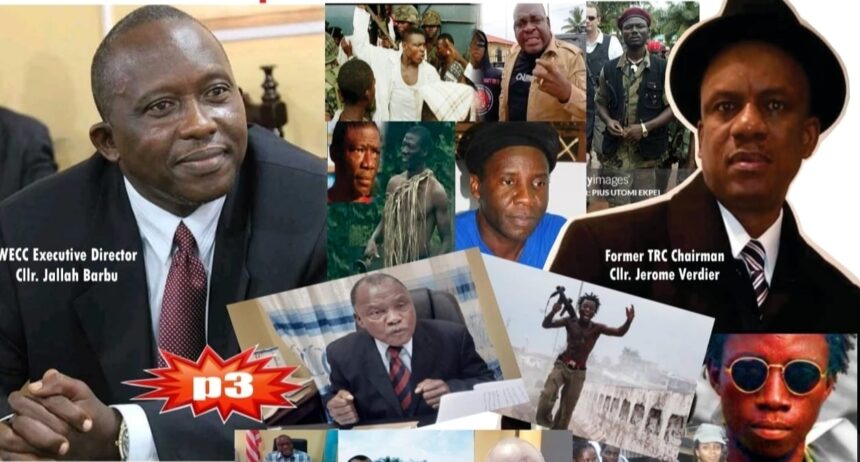
The Office of the War and Economic Crimes Court for Liberia (OWECC-L) is said to be preparing for the prosecution of individuals indicted by the Truth and Reconciliation Commission (TRC) Report, in order to bring justice to the thousands of victims who suffered the scars of the brutal civil crisis.
The Liberian Civil War, which ravaged the country from 1989 to 2003, left deep scars and a legacy of impunity. The conflict, marked by brutal violence, human rights abuses, and economic plundering, claimed over 250,000 lives and displaced millions. Now, the wheels of justice are turning as the War and Economic Crimes Court prepares to prosecute those accused of war crimes and crimes against humanity.
The war was characterized by atrocities committed by various factions, including the National Patriotic Front of Liberia (NPFL), led by Charles Taylor, the Armed Forces of Liberia (AFL), and other militia groups. Civilians bore the brunt of the violence, facing massacres, rape, and forced conscription.
The conflict was fueled by economic interests, particularly in the country’s natural resources, including diamonds, timber, and rubber. The exploitation of these resources contributed to the war’s prolongation and brutality.
In 2005, the Truth and Reconciliation Commission (TRC) was established to investigate the war’s causes, perpetrators, and impact. The TRC’s mandate included documenting human rights abuses, identifying those responsible, and recommending measures for accountability and reparations.
The TRC’s investigations revealed widespread atrocities, including mass killings, torture, and sexual violence. The commission identified individuals and groups responsible for these crimes and recommended prosecution.
The TRC submitted its findings to the Liberian government, which has now established the War and Economic Crimes Court to prosecute those accused of war crimes and crimes against humanity. The court aims to bring justice to victims and their families.
The court’s establishment marks a significant step towards accountability and reconciliation in Liberia. It sends a strong message that impunity will no longer be tolerated.
The prosecution of war crimes and economic crimes is expected to be a complex and challenging process. The court will need to navigate Liberia’s fragile post-conflict environment and ensure that justice is served while promoting national healing.
The international community has expressed support for the court’s work, recognizing its importance in promoting accountability and the rule of law in Liberia. The court’s success will depend on cooperation from Liberian authorities, civil society, and the broader international community.