
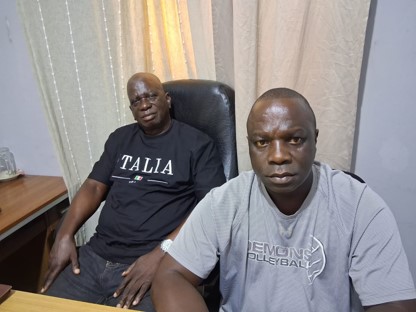
The Rubber Brokers and Farmers Union of Liberia (NARBFUL) has called on President Boakai to review Executive Order #166, arguing that the measure is severely affecting the livelihoods of thousands of rubber farmers and brokers across the country.
NARBFUL President, James W. Sayekea, described the executive order as an impediment to the growth of Liberia’s rubber sector, claiming it has forced many farmers into extreme poverty.
According to Sayekea, approximately 35 percent of rubber farms have shut down since the implementation of policies linked to the executive order, resulting in what he described as a significant decline in the sector.
He recalled that previous executive orders affecting the rubber industry had caused severe hardship for farming communities, alleging that many parents were unable to keep their children in school because they could no longer generate income from rubber sales. He further claimed that some families were unable to afford medical care, leading to tragic consequences for pregnant women whose husbands depended on rubber sales to pay hospital bills.
“We voted for you to protect us,” Sayekea said, appealing directly to President Boakai. “We support industrialization, but it should not come at the expense of Liberian farmers.”
Sayekea also challenged the classification of Technically Specified Rubber (TSR), arguing that it should not be considered a fully processed rubber product.
He accused some stakeholders of misleading the government on the issue, and urged the President not to rely solely on the advice he is receiving.
Sayekea further alleged that larger industry players are increasingly taking over functions traditionally performed by smaller brokers and farmers, creating an uneven playing field within the rubber value chain.
The NARBFUL president called for an inclusive dialogue involving government, farmers, brokers, processors and other industry stakeholders to reach a common understanding on the future of Liberia’s rubber sector.
He also criticized the Rubber Planters Association of Liberia (RPAL), alleging that the organization primarily protects the interests of large companies while contributing to the suppression of smaller operators. According to him, such policies could ultimately weaken the national economy if left unaddressed.
Also addressing the media, NARBFUL Vice President for Administration, Stanley F.J. Sayewolo, expressed concern over what he described as worsening conditions in the country’s agricultural sector.
Sayewolo underscored that the particular advice being proffered by officials at the Ministry of Agriculture regarding the rubber sector, especially with the issuance of the EO166, is misguided.
He called for a comprehensive audit of the Ministry of Agriculture, arguing that accountability is necessary to ensure policies reflect the interests of ordinary Liberians rather than an executive order that has the propensity to cripple the local economy.
“The success of any government lies in the happiness of its citizens. The economy is in danger if these issues are not addressed.”
Both executives of NARBFUL then urged the Boakai administration to engage all stakeholders before making further policy decisions affecting Liberia’s rubber industry, insisting that industrial development should complement, rather than undermine, the livelihood of local farmers and brokers.