
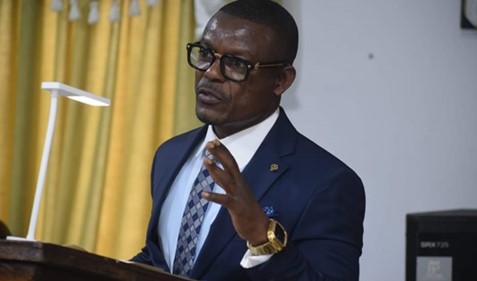
Cllr Arthur T. Johnson, a renowned lawyer and professor of criminal justice at the AME Zion University, has sharply reacted to the position statement made by the Liberia National Bar Association in regards to the Supreme Court’s ruling in the bill of information filed by some members of the House of Representatives, describing the LNBA’s position as effectively undermining the Supreme Court. According to Cllr. Johnson, this is the first time in the history of the bar.
The legal luminary had argued that the Supreme Court’s Wednesday ruling re-solidifies its legitimacy in the Liberian democratic system.
He frowned at the President of the LNBA, Cllr. Bornor Varmah, and warned that the bar should not get involved with politics.
In a related development, the former Pro-Tempore of the Liberian Senate and attorney-at-law, Armah Zulu Jallah, also observed that while the LNBA emphasizes the doctrine of separation of powers and suggests that the issue is a purely political matter for resolution within the Legislature, this perspective overlooks the essential role of the Judiciary in maintaining the rule of law. He said judicial oversight is a cornerstone of Constitutional governance, and the Judiciary has the responsibility to ensure that actions taken by any branch of government, including the Legislature, are in accordance with the Constitution. “If the legislative actions are deemed un-Constitutional or illegal, it is within the Supreme Court’s mandate to intervene, regardless of the political nature of the dispute,” he observed.
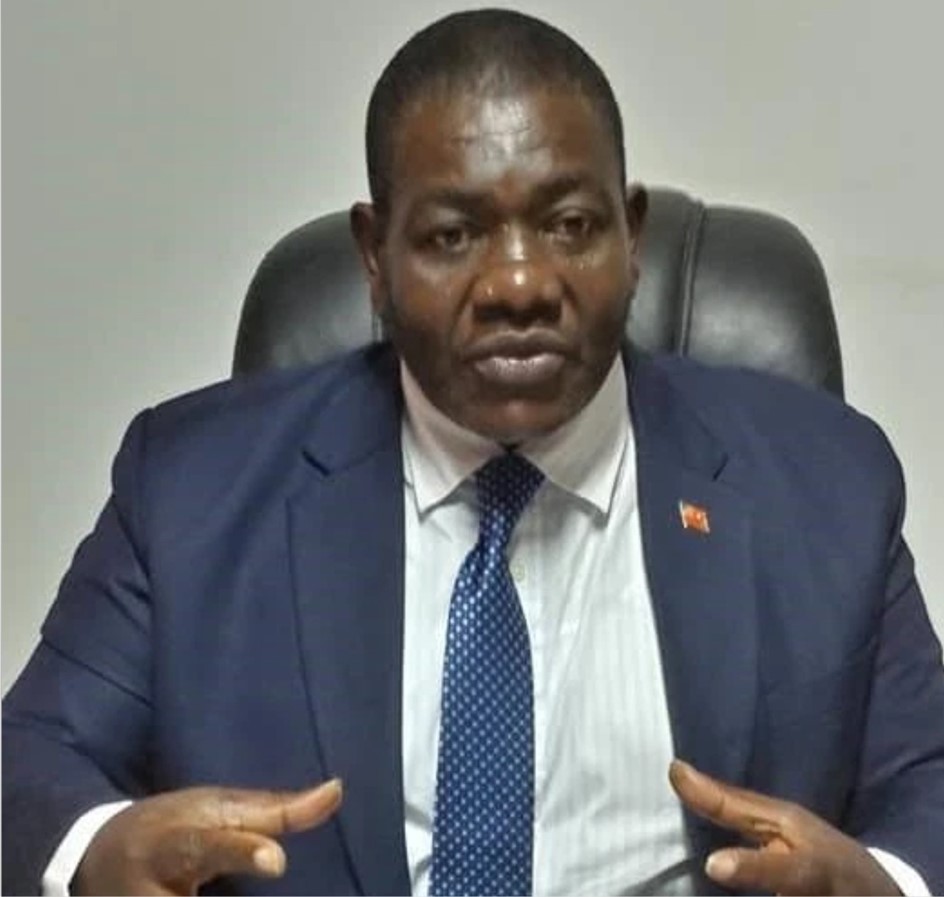
Atty. Jallah indicated that the argument for non-intervention by the Judiciary could open the door for unchecked actions by the Legislature, potentially violating Constitutional rights or undermining the rule of law. “The separation of powers does not mean that one branch is beyond legal scrutiny by another; it means that each branch has its own domain, with checks and balances to ensure no one branch becomes too powerful,” he added.
Regarding LNBA’s assertion that the issue at hand is purely political and should be resolved within the political sphere without judicial intervention, the former pro-temp noted that the LNBA is underestimating the importance of legal principles in resolving political disputes. He said political disputes, particularly those involving Constitutional interpretations or legislative procedures, can have broader legal implications that affect the functioning of the government and the rights of citizens; and if a political issue undermines the integrity of the Legislature or violates Constitutional principles, it becomes a matter of legal concern and thus within the purview of the Judiciary.
“The Judiciary’s role is not just to resolve disputes but to interpret the law, particularly in instances where Constitutional rights or the legal validity of legislative processes are at stake. Even if the issue originates from political dynamics, it is ultimately the responsibility of the courts to ensure that the actions of all branches of government comply with the Constitution,” he pointed out.
Regarding the perceived contradiction pointed out by the LNBA—that the Supreme Court declared the legislative sitting illegal but allowed for the benefits of budgetary allotments to stand—Atty. Jallah asserted that it is important to consider that judicial decisions often aim for practical outcomes, including preserving the continuity of governance. According to him, if the court found the session illegal but allowed the approved budgetary allocations to remain in effect, it may have been acting to avoid a vacuum or disruption in essential government functions.
He said, “The court’s decision to allow budgetary allocations despite declaring the session illegal may reflect an attempt to balance legal strictness with the practical realities of governance. The Court could have judged the session illegal on procedural grounds while recognizing the potential negative consequences of invalidating budgetary approvals that would affect the functioning of government.”
In conclusion, he said the Supreme Court’s intervention in the case is not necessarily an overreach, as the Judiciary has the duty to ensure that all government actions comply with the Constitution and statues, and that the separation of powers doctrine does not preclude judicial review of legislative actions. “While the LNBA’s concerns are valid in raising the importance of maintaining political independence, it is equally important to respect the Judiciary’s role in ensuring that legislative actions align with the law. Therefore, the Court’s ruling can be justified on the grounds of maintaining legal integrity and upholding Constitutional principles,” he underscored.
Another lawyer and member of the Alternative National Congress (ANC), Cllr. Moriah Yeakula-Korkpor, has accused the LNBA President of being a staunch member of the Unity Party (UP), for which she said he has decided to defend President Joseph Boakai’s backed “majority bloc” and Speaker, Richard Nagbe Koon.

Cllr. Yeakula-Korkpor claimed that Cllr. Varmah contested on the ticket of Unity Party (UP) in 2017 in District 1, Gbarpolu County, and emerged third, winning 13% of the votes.
“While we do not fault him for his political affiliations and ambition, we expect that he would stop pandering to his Political Party, prioritize the sanctity of the position he currently holds as President of the Bar, and uphold the constitution and respect for the Rule of Law,” she, too, observed.