
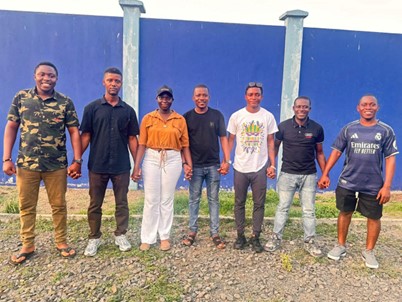
The newly elected leadership of the Reporters Association of Liberia (RAL) has launched a reconciliation drive aimed at healing post-election divisions and repositioning the institution, following a high-level meeting that brought together winners, defeated candidates, and members of the association.
The meeting, held at the PHP Park in Monrovia, signaled an early effort by the leadership-elect to consolidate unity while outlining a reform agenda anchored on decentralization, advocacy, and institutional strengthening.
Presiding over the gathering, President-elect J. H. Webster Clayeh described the meeting as a necessary step toward rebuilding cohesion after what participants acknowledged was a highly emotional electoral process.
“All of us here are leaders for the fact that people voted you—it doesn’t matter whether you won or lost. The election is over. Let’s come together and move the RAL further,” Clayeh said.
He acknowledged that the campaign period exposed both strengths and weaknesses among members, urging colleagues to reflect, improve, and unite in the interest of the association.
Clayeh also issued an apology to members who may have felt offended during the campaign, emphasizing that the leadership intends to operate inclusively and open to constructive criticism.
Providing the meeting’s context, Secretary-General-elect, Blamo N. Toe, said the initiative was driven by the need to address lingering tensions that often follow elections.
“We all know that during elections, even families and very close friends go against each other… to trash those feelings, we call this reconciliation meeting as one big institution,” Toe noted.
He underscored that the gathering was designed not only to mend relationships but to reset the tone for a united and forward-looking leadership.
A dominant theme throughout the meeting was the need to decentralize the operations of the association.
Former vice presidential candidate, Sei T. Koyea, emphasized that the RAL must expand beyond Monrovia to remain relevant to reporters nationwide.
“Our vision has been clear—that RAL should be visible and not Monrovia-based,” Koyea said, recounting concerns from journalists outside the capital who felt disconnected from the institution.
Echoing similar sentiments, former Assistant Secretary-General candidate, Joshua Freeman, proposed that future elective congresses be hosted in counties, and that a regional voting model be considered to enhance participation.
“Let this leadership ensure that RAL is decentralized to boost its visibility,” Freeman urged.
Vice President-elect, Kruah Thompson, described the meeting as a strong indication of unity, noting that the presence of nearly all candidates demonstrated collective commitment to the association.
“Our vision for the association can only be achieved with the collective support of everyone,” Thompson said, while also offering apologies for any tension arising from the campaign.
Financial Secretary-elect, Cynthia Quinisier, commended members for their peaceful participation in the elections, describing it as a testament to the maturity of the institution.
Former presidential candidate, Barclay M. Karnley, Jr., struck a conciliatory tone, stating that he harbors no bitterness over the election outcome.
“We know elections go with emotions, but that’s the beauty of the process. The RAL was established before us; we can come and go, and others will take on,” Karnley said.
He pledged not to undermine the new leadership, but emphasized that constructive criticism would remain essential to ensuring accountability.
Karnley also cautioned against internal divisions within the leadership, warning that such fractures could undermine the association’s broader interests.
In a symbolic move, Campaign Chairman Trokon G. Flahnma, Jr. announced the dissolution of Team Clayeh, effectively marking the end of campaign-era alignments.
“But it was election, I had to choose my side,” Flahma said, while publicly apologizing for any statements made during the campaign that may have caused offense.
He, however, cautioned that the new leadership would be held accountable if it fails to heed constructive advice.
The meeting concluded with several key resolutions aimed at strengthening the association: a firm commitment to reconciliation and unity among all members; recognition of all candidates as leaders regardless of electoral outcome; prioritization of decentralization to expand RAL’s national footprint; strengthening advocacy and welfare programs for reporters; consideration of hosting future congresses outside Monrovia; exploration of regional voting mechanisms to enhance participation; and establishment of a decentralized committee to develop a three-year Strategic Agenda.
Closing the meeting, President-elect Clayeh reaffirmed his commitment to inclusive leadership and institutional reform.
“There will be no friction in our leadership and we will ensure that we incorporate the views and suggestions of members,” he assured.
He disclosed a plan to constitute a decentralized committee to craft a policy-driven roadmap for the Association, signaling a shift toward structured and strategic governance.
The reconciliatory meeting marks the first major step by the RAL leadership-elect to unify the institution and set the tone for what it promises will be a more inclusive, transparent, and nationally responsive association.