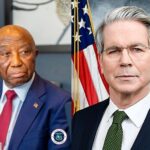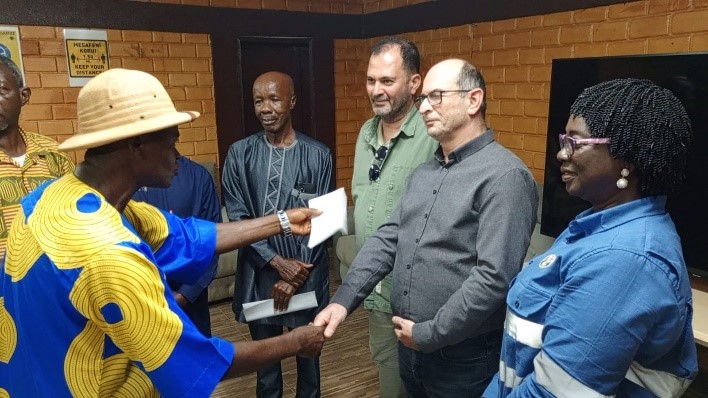

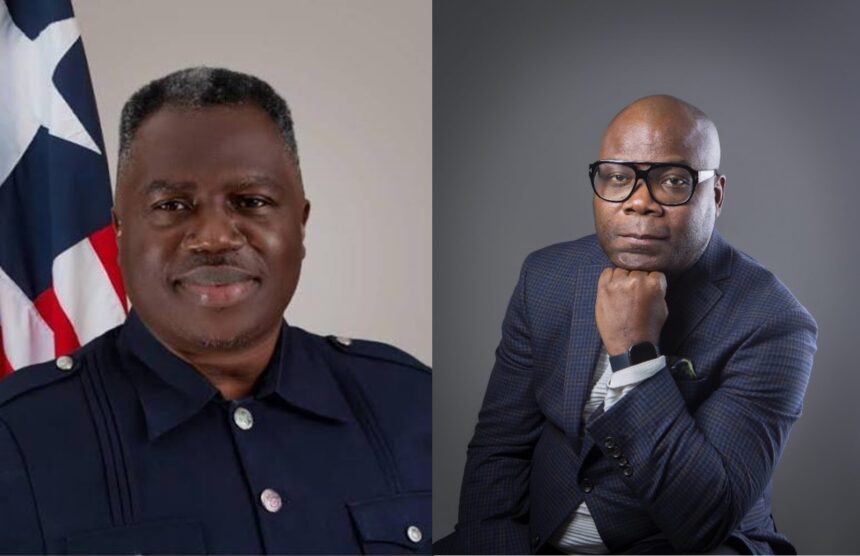
FrontPage Africa Managing Editor Rodney Sieh has publicly called on Vice President Jeremiah Kpan Koung to clarify his relationship with individuals connected to the on-going investigation into a US$19.2 million cocaine seizure at Roberts International Airport.
Speaking on “One on One with the CEO” on Spoon TV and on Prime Time Liberia, Sieh pointed to photographs circulating online that show the Vice President with people named in public discussions around the case. He framed the request as a matter of transparency, not accusation, given the scale of the seizure and the public attention it has drawn.
The push for clarity intensified after conflicting accounts emerged between Anthony “Tony” Deinuka and the Vice President. Deinuka described himself as a supporter and loyalist of Koung, saying he admired the Vice President’s leadership and decided to back the Unity Party because of it. He said photographs with Koung were taken during a birthday celebration and a visit to the Vice President’s office, and that he even used one as his social media profile picture. Deinuka also said he knew Michael Brown from airport interactions but had no contact after leaving airport work.
Vice President Koung rejected the suggestion of a personal association. In a statement responding to Sieh’s broadcast, he said he does not know the individual identified as Anthony and that, as Vice President, he routinely takes photos with many people at public and private events. “As Vice President, I do take photos with many individuals at public and private events. I do not know Anthony, and the photo taken does not suggest my knowledge of any personal dealings he may be involved with,” Koung said. He also dismissed the idea that a photograph alone proves a relationship or knowledge of someone’s activities.
Analytically, the two positions do not directly contradict on a verifiable fact, but they reveal a gap in perception that fuels public debate. Deinuka asserts a self-declared support and proximity through events and visits. Koung asserts distance and anonymity in crowd interactions. In politics, this dynamic is common: supporters may claim closeness that officials do not reciprocate, especially when images are used to signal access. The dispute, however, lands in a sensitive context where optics carry weight.
Sieh argued that optics matter precisely because of what is at stake. He noted that public insinuations have grown due to the Vice President’s reported association with Tony and, indirectly, Michael Brown, and that reports of suspects allegedly going missing have heightened concern. “At the Vice President’s level, I think it’s only fair for him to draw a clear line between himself and those individuals. He should come out and say, ‘Look, I’m not part of this. I’m not involved in their lifestyle,’” Sieh said. He also questioned how Michael Brown could have been released from custody, implying that such a move would require authorization.
Koung countered by reaffirming a zero-tolerance stance he first stated after the November 24, 2025 arrest of Clifford Payne. “As I stated when Clifford Payne was arrested, I still maintain that if my wife, children, relatives, friends, political associates, and employees are connected to any drug related activities they should face the full weight of the law,” he said. That framing positions the Vice President as aligning himself with accountability, while separating personal responsibility from incidental public encounters.
The broader context remains the June 2026 RIA seizure and the parallel financial probe. Police say the investigation is on-going, with several suspects charged and others still being pursued. As the case moves from arrests to prosecutions, the demand for clear public communication from senior officials will likely grow. Whether Koung offers a more detailed public explanation beyond denying personal knowledge may determine how much the photograph issue continues to shape public perception of the administration’s anti-drug posture.