

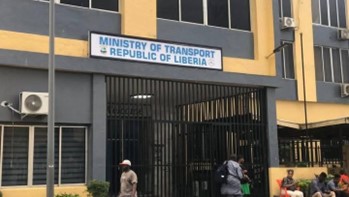
The Government of Liberia, through the Ministry of Transport and the Civil Service Agency (CSA), has announced the transfer of driver’s licensing and vehicle registration services from the Ministry of Transport to the Liberia Traffic Management, Inc. (LTMI). Effective March 1, 2026, LTMI assumed operational responsibility for the issuance of driver’s licenses and vehicle registrations as part of a broader reform initiative aimed at improving efficiency, strengthening technological integration and enhancing service delivery standards within the transport sector.
According to a joint Transport Ministry and CSA press release, “This transition represents a deliberate restructuring of institutional roles. While LTMI will now manage the transactional and operational components of licensing and registration (on behalf of the Ministry of Transport), the Ministry of Transport retains its core mandate in policy development, regulation, oversight, compliance, monitoring and enforcement. The reform creates a clear separation between service delivery and regulatory supervision, enabling stronger accountability and improved performance oversight.
“In light of the development, three divisions within the Ministry of Transport have been reconfigured to align with the ministry’s strengthened regulatory role. The former Division of Motor Vehicle has been transformed into the Division of Motor Vehicle Policy and Regulation. This division will now focus on developing regulatory standards, vehicle classification frameworks, compliance guidelines, safety benchmarks and quality control oversight of licensing and registration operations. It will monitor adherence to national transport regulations and ensure alignment with established best transport practices.
“The former Division of Drivers’ License has been restructured as the Division of Axle Load Management. This division will concentrate on vehicle weight compliance, highway preservation standards, axle load monitoring mechanisms, and coordination of enforcement activities relating to heavy-duty and commercial transport operations. The division’s work will contribute directly to the protection of national road infrastructure and the promotion of safe and responsible freight movement.
“Similarly, the former Division of Tricycles and Motorcycles has been reorganized into the Division of Traffic Monitoring and Enforcement. This division will oversee traffic surveillance coordination, compliance monitoring, violation reporting systems and collaboration with relevant security and municipal authorities to strengthen urban traffic management and public safety initiatives.
“The Ministry of Transport and the CSA are in the process of finalizing comprehensive terms of reference for each of these divisions to ensure clarity of mandate, operational benchmarks and measurable performance standards consistent with its enhanced policy, regulatory and supervisory responsibilities.”
The release observed that the two entities have taken the appropriate measures to ensure that the status of civil servants previously assigned to the impacted divisions is absorbed in the newly created divisions. “The Civil Service Agency, in close collaboration with the Ministry of Transport, has conducted a competency assessment of personnel within these divisions to facilitate an orderly and policy compliant transition. Civil servants will be reclassified and redeployed in the newly formed divisions, in accordance with applicable human resource policies and regulations. All impacted employees will be appropriately placed based on their qualifications, competencies and institutional needs,” the joint release observed.
“The government assures all civil servants that this transition does not represent a displacement of employment but rather a strategic repositioning of functions. Employees are encouraged to view the reform as an opportunity to contribute to a more professional, structured, and rigorous oversight framework. The strengthened regulatory role of the Ministry of Transport demands heightened accountability, technical competence and institutional discipline, and the dedication of public servants remains central to this effort.
“In a related development, the Ministry of Transport will commence the installation of twenty-five traffic monitoring systems across major streets and intersections in Monrovia. These systems, which include closed-circuit surveillance cameras (CCTV) and modern traffic light infrastructure, are expected to enhance traffic flow management, support enforcement operations, improve road safety, and introduce greater technological oversight within the land transport environment.