
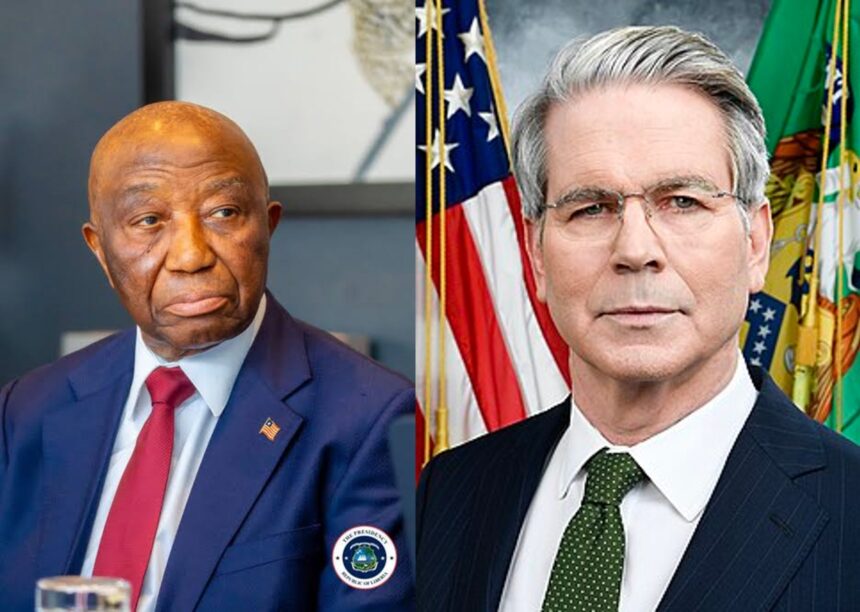
A briefing on the financial trail behind the June 8 seizure of cocaine valued at US$19.2 million at Roberts International Airport (RIA) and other relevant drug financial transactions has reached President Joseph Nyuma Boakai through a third-party source, not directly from the United States Department of Treasury Financial Intelligence Unit team that was recently in Liberia.
According to sources, the money movements were traced to a local Liberian bank in Sinkor with majority shares owned by an American citizen. Investigators say those transactions are now central to the Joint National Security Investigative Task Force probe.
The U.S. Treasury FIU team concluded its mission after working with Liberian financial and security institutions on transaction analysis, compliance checks, and follow-the-money leads tied to the RIA consignment. While the team has departed, officials say the findings it left behind, combined with local banking records, have deepened concern inside government about how the shipment was financed and moved through the system.
President Boakai received the third-party briefing before departing for Turkey. Sources close to the Presidency say he is receiving updates from both domestic investigators and international partners, and that he knows far more about the case than what has been made public.
The President is described as unhappy with what has surfaced so far, but resolute. His instruction remains unchanged: pursue the case to its conclusion and prosecute anyone linked, regardless of position or nationality.
The RIA cocaine was reportedly destined for markets in the United Kingdom, Denmark and Belgium, with Brussels named as a key entry point. The human cost in those destinations is significant. In England and Wales, 5,565 drug-related deaths were registered in 2024, the highest on record, with cocaine deaths rising for the thirteenth straight year. Across the EU, there were an estimated 7,600 fatal overdoses in 2024. Denmark recorded 184 drug-induced deaths in 2021, and Belgium recorded 172 in 2020, according to the European Union Drugs Agency.
There is no public confirmation of blanket cancellations of Liberia cargo by major international airlines or airports. However, experts warn that large seizures usually lead to heightened screening of shipments from the country of origin. Liberian travelers are not under an official EU or UK ban, but should expect increased scrutiny at borders. Immigration and customs authorities in Europe have flagged West African transit routes, meaning Liberian passport holders may face more questions and luggage checks.
The Boakai administration says enforcement and reform will run together. The first group of suspects linked to the RIA handling are being prepared for charges and remand, with a second wave targeting higher-level facilitators expected in the coming weeks.
With U.S. Treasury FIU findings now in the mix and local bank records under review, the government says the priority is to dismantle the network, close gaps at RIA, and protect Liberia’s financial and international reputation.