
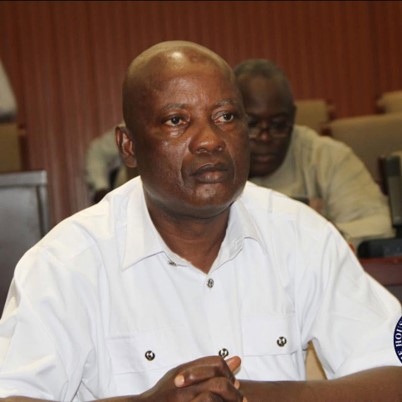
Less than 72 hours after Bomi County’s district #1 Representative, Obediah Varney, publicly admitted he authorized the sale of earth-moving equipment valued at $2.5 million for just $66,500, lawyers for British investor, Hans Armstrong, have formally notified the government of an impending US$10 million legal claim.
The threatened suit—which would target the Legislature, Executive, and Judiciary—cites “unlawful sale of their client’s earth-moving machines” and Representative Varney’s own public admission as the basis for damages.
According to Armstrong’s legal team, the claim will seek compensation for “injury to person, deprivation of income and livelihood”, along with punitive and general damages.
“The law is clear. When state institutions act outside their mandate, they must be held accountable,” the statement from Armstrong’s lawyers read.
The sale occurred in Senjie Township, Bomi County, despite what Justice Minister and Attorney General Cllr. Oswald Tweh described as “multiple court rulings” affirming Armstrong’s ownership. “Liberian courts have recognized [Armstrong’s] ownership interest in the equipment and have ruled in his favor in proceedings connected to this matter,” Tweh said recently.
Yet court records point to county-level officials moving forward anyway.
Documents cite Judge Ciapha Carey of the 11th Judicial Circuit Court in Bomi County as acknowledging that Bomi County Superintendent, Miatta Dorley, wrote the court on September 17, 2025 and requested the facilitation of a bidding process. That process was reportedly won by scrap dealer Fatu Kanneh with a bid of US$66,500.
Judge Carey’s record states that when Superintendent Dorley later asked the court to order that the US$66,500 payment be made directly to the court, “the court declined to be a part of the sale of the scrap between the county authority and local residents of Sackie Township”. The judge added, “The Superintendent of a county is the vast jury of that county. Therefore, it is the purview of the County Superintendent to handle all county-related matters involving its citizens.”
According to the Bomi County Civil Society Organizations Coalition (BCCSOC), Representative Varney disclosed in a telephone interview that a joint committee arranged the sale. He said the committee included staff from the Bomi County Superintendent’s Office, his legislative office, and “other stakeholders”.
However, Varney did not provide BCCSOC with a full roster of the committee’s members, its exact mandate, meeting dates, or minutes of its decisions. Those records have not been made public.
BCCSOC says Varney identified the buyers as Fatu Kanneh and Abraham Barrey. The intended use of the equipment, the specific terms of sale, and whether the transaction followed a competitive public bidding process remain unconfirmed. BCCSOC told reporters it has not independently verified the purchase agreements and is seeking comment from Kanneh and Barrey.
The Superintendent’s Office had not issued a public statement as of press time. BCCSOC said it has also contacted the Ministry of Local Government for clarity on legal procedures governing the disposal of county assets, and is awaiting a response.
Civil society actors in Bomi say the committee’s role raises oversight concerns. “If public assets are being sold, the process should be open, competitive, and documented,” said one local advocate who asked not to be named while BCCSOC’s inquiry continues.
The US$2.43 million discrepancy between the equipment’s reported $2.5 million value and the $66,500 sale price has intensified calls for an independent audit of the transaction.
Armstrong’s legal team has not filed the suit yet, but has issued a formal notice to the government. If pursued, the $10 million claim would mark one of the largest recent damage claims against the government over alleged asset seizure.
Representative Varney, Superintendent Dorley, and the Ministry of Local Government have not responded to detailed requests for comment by publication time.